
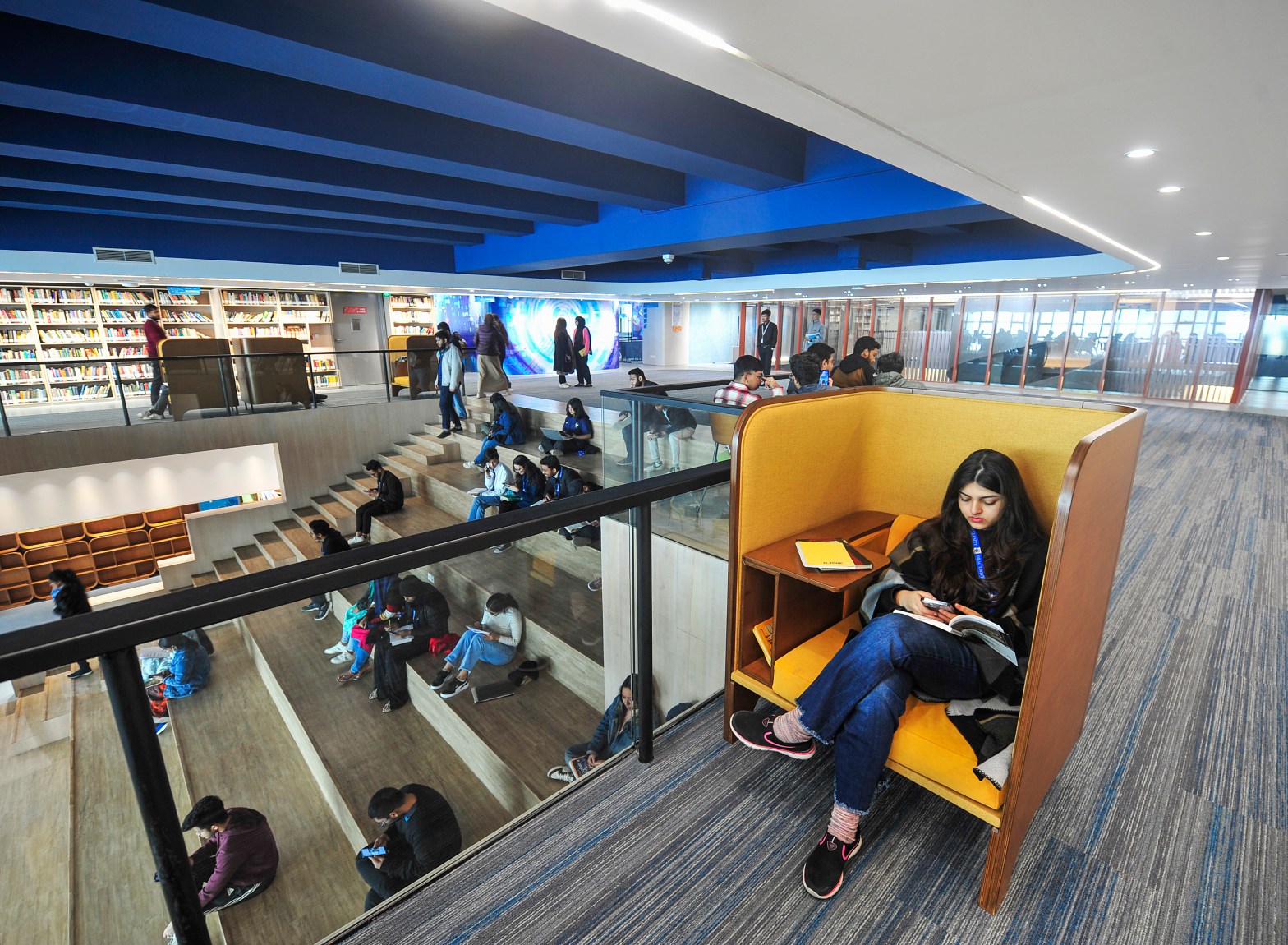
This blog-post is the first of a new thread within the De Gruyter Brill Conversations series that explores how librarians continue to triumph in the increasingly resource-squeezed Higher Education environment.
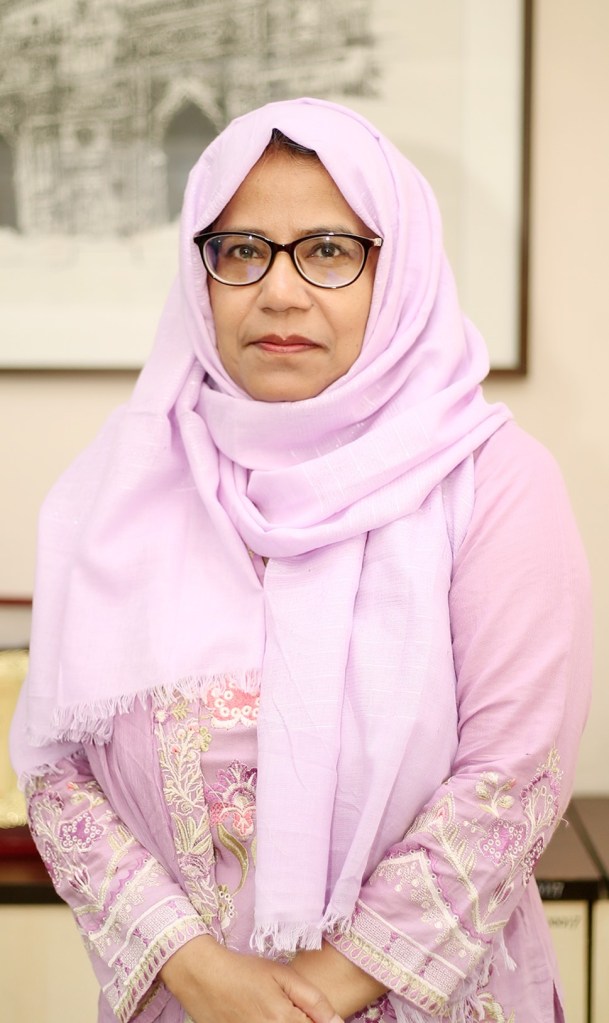
Ms Hasina Afroz, University Librarian at BRAC University, Bangladesh, shares her views and inspirations with Linda Bennett of Gold Leaf.
From vision to reality: building a world class university with limited resources
LB: I know you are extremely proud of Brac University. Could you tell us a little more about it?
HA: I am very proud to work at BRAC University! Its commitment to distinctive education, meaningful research, and social development aligns perfectly with my values, and it is inspiring to be part of such a university. BRAC University was established in 2001 by the Bangladesh Rural Advancement Committee, one of the world’s largest non-governmental development organisations.
The university adopts a liberal arts approach. It offers 16 undergraduate and 15 graduate programmes, focusing especially on Business Administration, Computer Science and Engineering, Architecture, Environmental Science, Law, Public Health and some Humanities and Social Science subjects. It has 20,379 students, 1,190 faculty members (some part-time), and 347 non-teaching staff.
Making an impact through research is the University’s guiding star. Several of its schools and institutes are recognised internationally for their contributions to research and the exchange of knowledge and it is constantly developing new specialisms – e.g., currently, in Robotics. The University supports philanthropic work and has established multiple key programmes – e.g., in public health, climate change, architectural innovation and ethic business development for the garment industry, as well as assistance for the Rohingya people.
LB: Libraries across the world are experiencing budget squeezes at the moment, but libraries in Bangladesh – and similar young, relatively poor countries – are probably suffering more than most. Could you tell us what your main budgetary challenges are and how you alleviate them – e.g., by applying for grants, by actively seeking out donors, by lobbying the government, etc.
HA: Thank you for highlighting the challenges faced by libraries, particularly in countries like Bangladesh. As a private university library, we face unique financial pressures, and budgetary constraints circumscribe the kinds of support we are able to offer to our communities. We receive no direct government funding and rely on student tuition fees and grants for income. It has become increasingly challenging to maintain a relevant and up-to-date library collection that meets the diverse needs of our users; and insufficient funding hampers our capacity to invest in and maintain the technological infrastructure required by a modern library service. To address this, we actively seek out funding opportunities from organisations such as the University Grants Commission of Bangladesh [UGC] and national and international organisations that support library development, literacy programs, and digital inclusion. Here are some examples:
- Recently we submitted an application for funds to support our newly established Digital Scholarship Lab. We need data analysis and visualization software and other digital tools, as well as the resources to set up training programmes.
- We collaborate with library consortia to negotiate favorable subscription rates with publishers and vendors.
- We are planning to set up an Open Education Resources [OER] programme, as a cost-effective and equitable alternative to traditional textbooks. BRAC University is a member of the Open Society University Network [OSUN]. As part of this network, all library directors from OSUN member universities meet both in person and virtually to share experiences, attend training programs, and support the collaborative courses offered to students and faculty.
- As a developing country, we benefit from free access to resources through the Research for Life programme.
LB: Please describe some recent fund-raising activities – if you can also tell us about some successes, that would be of great interest to readers.
HA: Inspired by our Founder, Sir Fazle Hasan Abed’s, vision of seeing BRAC University become the Harvard of South Asia, our purpose is to build a world-class library here. We are actively committed to investing in open source and open access technologies, and concentrate on the development of resources uniquely tailored to the needs of our patrons.
Here is how we are making it happen:
Initially, securing funding for technological advancement was challenging. To address this, we made a strategic decision to adopt free and open-source technologies commonly used by prestigious institutions like Harvard and MIT. Although the initiative was driven by budgetary constraints and a commitment to achieving international standards and forging strong connections with global academic communities, it still required funding for essential hardware and other related expenses. The library therefore embarked on a concentrated fund-raising mission and submitted targeted project proposals to the Elsevier Foundation, INASP, and the UGC [University Grants Commission]. We are proud of our high success rate in securing grants from these organisations.
Between 2007 and the present, we have achieved significant progress by developing digital library projects designed to address our specific needs. We have established the following:
- an Institutional Repository [DSpace] to preserve and provide access to research outputs
- an Integrated Library System [Koha] for efficient management of library resources
- a Discovery Tool [VuFind] to simplify access to a wide array of information
- a dynamic library website [Drupal] to enhance user engagement
- a Data Repository [Harvard Dataverse] that enables secure and collaborative management of research data.
Most recently, we submitted a project proposal to the Bangladesh University Grants Commission for funding titled “The Creation of a Cutting-Edge Digital Scholarship Hub: Sustainable Research and Innovation.” If the proposal is accepted, the money will support our newly-established Digital Scholarship Lab at BRAC University Library’s new campus.
Our library team now manages the servers and handles version upgrades for all these systems, ensuring their continued functionality and relevance. We also provide direct assistance to numerous public and private universities in Bangladesh when they are implementing open source library technologies and standards. We help to set up new libraries and conduct many workshops and training programmes to enhance the capabilities of library professionals and systems librarians throughout Bangladesh. Between 2007 and 2024 we trained 630 librarians from 37 institutes.
LB: Are there challenges you face besides financial ones?
HA: A significant difficulty is being able to understand and adapt to publishers’ very diverse business models. Balancing access with costs, navigating open access policies, curating high-quality content for courses, supporting researchers who have specific needs, and staying up to date in a rapidly changing information landscape to ensure relevance are all key challenges. Sometimes changes at the top of the university’s management can add to the complexity of our work.
LB: What are your future plans for developing the library?
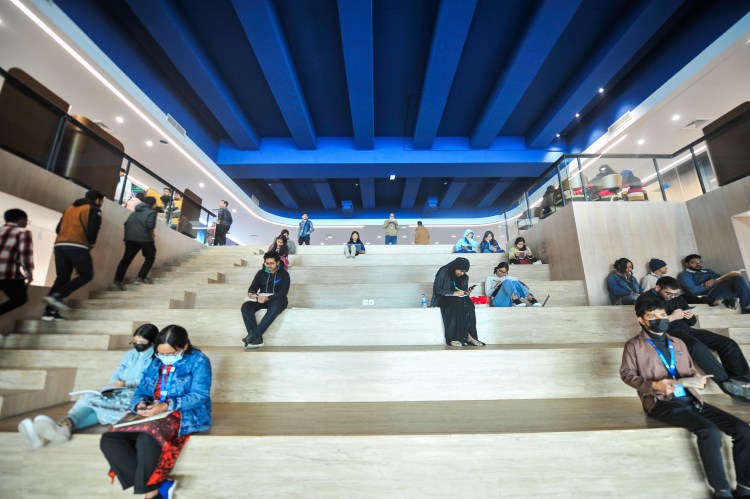
HA: The development of the Digital Scholarship and Library Innovation Lab I mentioned earlier represents a significant example of how we are looking to the future. This facility will provide researchers, students, faculty, and university partners with state-of-the-art resources, including high-performance computing tools, designated research areas, and training and workshop facilities. We believe the Lab will act as a conduit to consolidate collections, resources, tools and expertise, creating a centralised hub for learning and teaching, initiating new research, and fostering collaboration. It will also explore and assess emerging library technologies, develop and test innovative ideas, and provide training. It will support every stage of the research and scholarly publishing lifecycle.
The foundation of the Lab is a landmark for Higher Education in Bangladesh. It establishes a precedent for digital scholarship here and encourages other Bangladeshi universities to follow suit.
Our librarians are also planning to collaborate more closely with our researchers, using the Research Data Repository I mentioned.
LB: Tell is a little about yourself. How long have you been a librarian? Where did you train? How long have you been at BRAC? How would you like to develop your career?
HA: I have been working at BRAC University since 2007. Before that I served as a librarian and reference librarian at Victoria University in Melbourne, Australia, and at the Centre for Asia and the Pacific [CIRDAP]. I have a BA (Hons) and a Master’s degree in Library and Information Science. Throughout my career, I have successfully prepared project proposals and secured overseas grants from various national and international organizations. As Project Leader at BRAC University Library, I implemented most of the advanced library systems I have mentioned and I have worked as a consultant to libraries across Bangladesh. I received the Best Staff Award for my contributions to the university and the Turnitin Global Innovation Award for supporting academic integrity among students and faculty. I have actively participated in various advisory committees at both national and international levels.
My current professional interests include identifying appropriate library technologies, implementing best practices, promoting OERs and advancing digital scholarship within libraries. I am passionate about enhancing the role of librarians in academia and fostering a vibrant academic community.
LB: As you know, in many parts of the world higher education has been under attack in recent months. What do you think will happen to higher education – and by extension, the libraries that serve universities – in the next 2 – 3 years? What can librarians do to maximise their work?
HA: This is a complex question that requires a thoughtful response. The situation is very unpredictable. Given the uncertain conditions, we need to be proactive and adapt our services to meet the changing needs of students and faculty, focusing on areas like data literacy, digital scholarship, and open access resources. Librarians can maximize their impact by becoming more visible and vocal advocates for the value of academic libraries.
This blog post was written by Linda Bennett and first published on the De Gruyter Brill “Conversations” blog.
 Gold Leaf